The premise focuses on cultural travel abroad, where the language is different from our own.
While the data provided may vary by country, these are the percentages that represent them.
| Types of travel | Estimated percentages % |
| Tourist | 60-70 |
| Work | 20-30 |
| Cultural | 10-15 |
I am sharing my knowledge obtained from nine cultural trips to six cities, with a total duration of more than sixteen months. What is mentioned here refers to the experience accumulated over the years, its detailed implementation, and the constant improvement of what has been learned. It is a practical and empirical approach, defined as that which is acquired through direct interaction with reality and sensory experience, without formal scientific backing. In this context, I explore a holistic approach to carrying out this type of travel.
Differences between cultural and tourist travel
Cultural Scenario: The goal is to acquire knowledge and immerse oneself in the culture of a specific site.

Tourist Scenario: Priority is given to fun and recreation, centered mainly on a pleasant sensory experience.
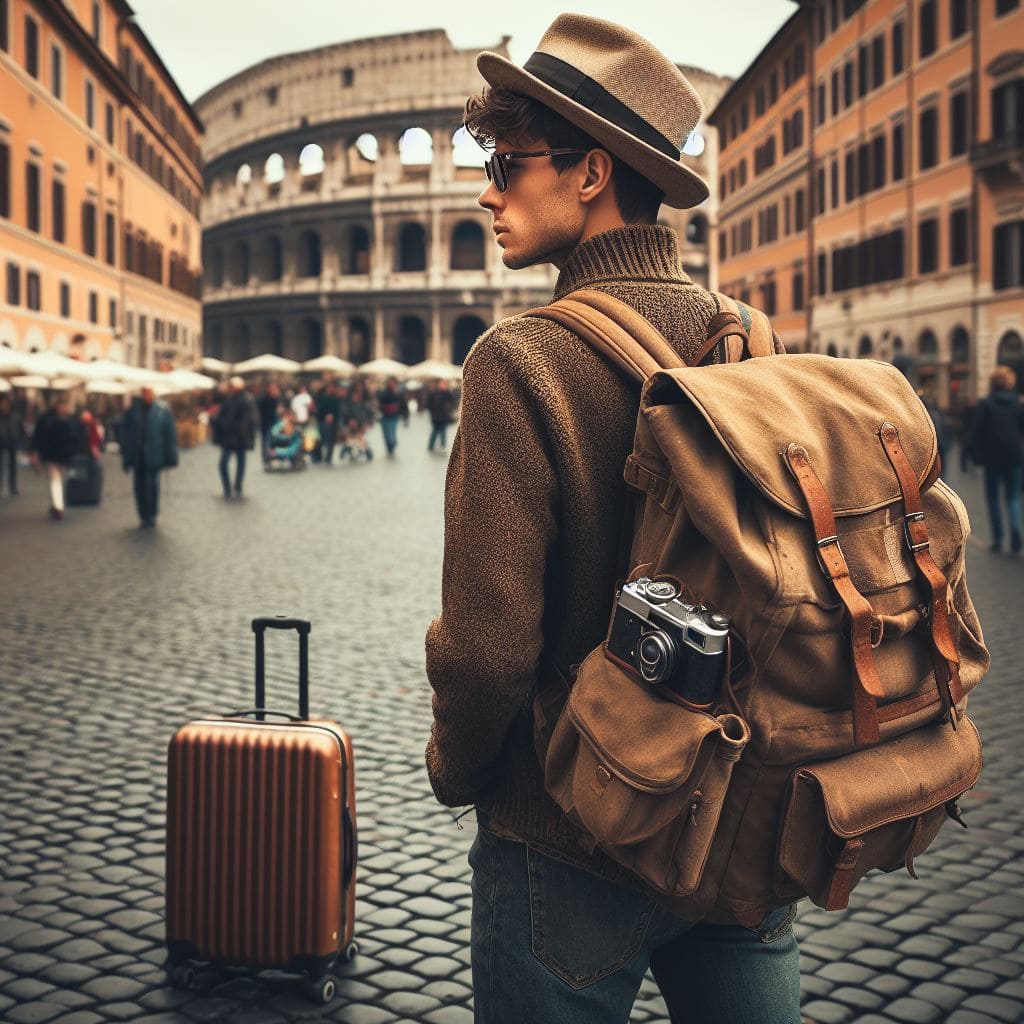
The main objective in a tourist route is to see different destinations and sites of interest; in a cultural trip, the intention is to live that place. To be more explicit, let’s take the city of Rome. In the first type of trip, one visits places of great historical interest: the Colosseum, the Roman Forums, the Pantheon, the Vatican, among others. In the second type of trip, the aim is to live like a Roman; the idea is to immerse oneself in the daily life of local inhabitants, interacting with them in a meaningful way
Fundamental Premise
An advanced command of the language is required, as detailed in the Language Learning section, since the travel time is usually longer than that of a common tourist trip.
Why is there a lack of information on cultural travel?
It is rare to find relevant information on cultural travel, likely because it is less common and does not receive much publicity, in addition to the difficulty of finding precise details on recommended activities. No one takes the time to disseminate this information. Another point to keep in mind is that the organization must be adapted to each person’s individual preferences, as tastes and interests are very personal.
Planning
It is necessary to start planning at least 90 days before traveling, as this process takes time. In my case, I relied on four pillars:
- I bought books with tips about the places I planned to visit.
- I searched the Internet for the things I was passionate about; this used to take a lot of time, but now with tools like ChatGPT, Gemini, Copilot, and similar ones, the time has been reduced to a minimum.
- I subscribed to newsletters (I have more than thirty); this keeps me informed about new events and those in progress.
- I received support from local people.
Logistics
Logistics are crucial and should be considered with the same importance as planning. In my case, already having an apartment rented in the destination city (Rome), I would review the different transportation options available (trains, metro, buses, trams). Even when moving on foot from one place to another, I considered travel times, which should not be underestimated. I always prepared for possible setbacks, reserving at least 15 extra minutes.
Plan Proposal
In each of these events, the importance of learning and direct interaction with local people is highlighted. Even though a tourist trip can be very educational, the nature of that learning differs from a cultural travel.
Academic Activities
- Courses and Seminars: We can choose to improve our command of a specific language or take more specialized courses, such as diction, creative writing, or specific topics. We can also choose to attend classes as auditors at a university, which is free in some places.
- Conferences: These are usually free and cover exciting topics, providing the opportunity to interact with other participants and the speaker.
- Literary Cafés: These are spaces where writers present their books; sometimes the purchase of a copy is requested, though it is not customary; they are usually very enriching encounters. One of the most special moments is the opportunity to chat with the author at the end of the presentation.
- Literary Teas: Hosts discuss a specific cultural topic; an entrance fee is required, which is equivalent to half the price of a theater ticket.
General Interest and Leisure Activities
- Fairs: A great occasion to keep up with global news. Personally, I am mainly interested in the field of technology.
- Shows: This category includes options like café concerts or stand-up shows.
- Theater: Attending a play in a language other than your own is fascinating, especially if the play is of high quality.
- Cinema: Watching a film abroad feels unique, especially if the work was made in the country you are currently in.
- Events: I prefer to focus on seeing the work of artisans in their workshops firsthand, such as jewelers and carpenters.
- Interactive Experiences: Participating in practical activities like dance, gastronomy, wine tastings, and craft classes.
- Music: In a concert, the need to interact with the nearby audience shows that language command is not insignificant.
Recent Cultural Travel Experience
As an illustration, I present three examples that proved both remarkable and delightful.
Collector
- Speaking with Enrico Sturani, the most important postcard collector in Italy. Enrico welcomed me into his home and shared his collection of 140,000 postcards.
Jeweler
- Conversing with jewelry designer Diego Percossi Papi, who showed me his project titled ”il prezioso cammino di Dante“, which was exhibited in Sofia. This project took him 4 years, and in it, one can see represented 3 cantos of the Inferno, 4 of Purgatory, and 4 of Paradise. Additionally, he also showed me some of the jewelry he created for well-known films such as ‘Murder on the Orient Express’ and ‘Francesca e Nunziata’ starring Sophia Loren.
Subterranean cave
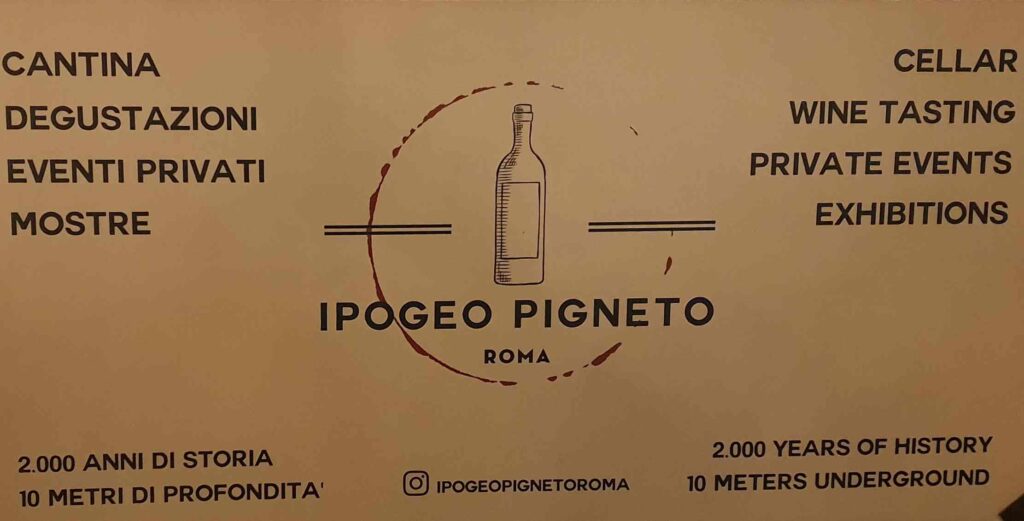
- Attending a wine tasting at the Necci restaurant, which took place in an underground setting known as an ‘ipogeo‘ (hypogeum). I had the opportunity to learn from Nico, the sommelier, who turned out to be a charming person, and I was able to enjoy the pleasant company of the couple who owned the property. The owner mentioned that, although the property title mentioned the existence of a cellar, it was never found while the establishment functioned as a restaurant. It was only when planting a shrub in the garden and noticing it withered quickly that, upon trying to remove it, they discovered something beneath the ground had crumbled, fortuitously revealing stairs leading to an underground cave. Its restoration took eight months. It is made of ‘pozzolana,’ a flexible material that does not disintegrate. In the past, this place was used for winemaking, and in the Middle Ages, it was transformed into a place to stable livestock, as can be seen from the horseshoes embedded in the wall built during that era. Currently, it is used as an exclusive space for wine tastings, but they are considering the possibility of expanding it to also include cheese tastings. Afterward, we headed to dinner, where the owners offered us complimentary wines and sparkling wines, and we shared family anecdotes throughout the entire evening.